Launch offer — valid today only

📄 Digital book in PDF · read it on your phone or print it

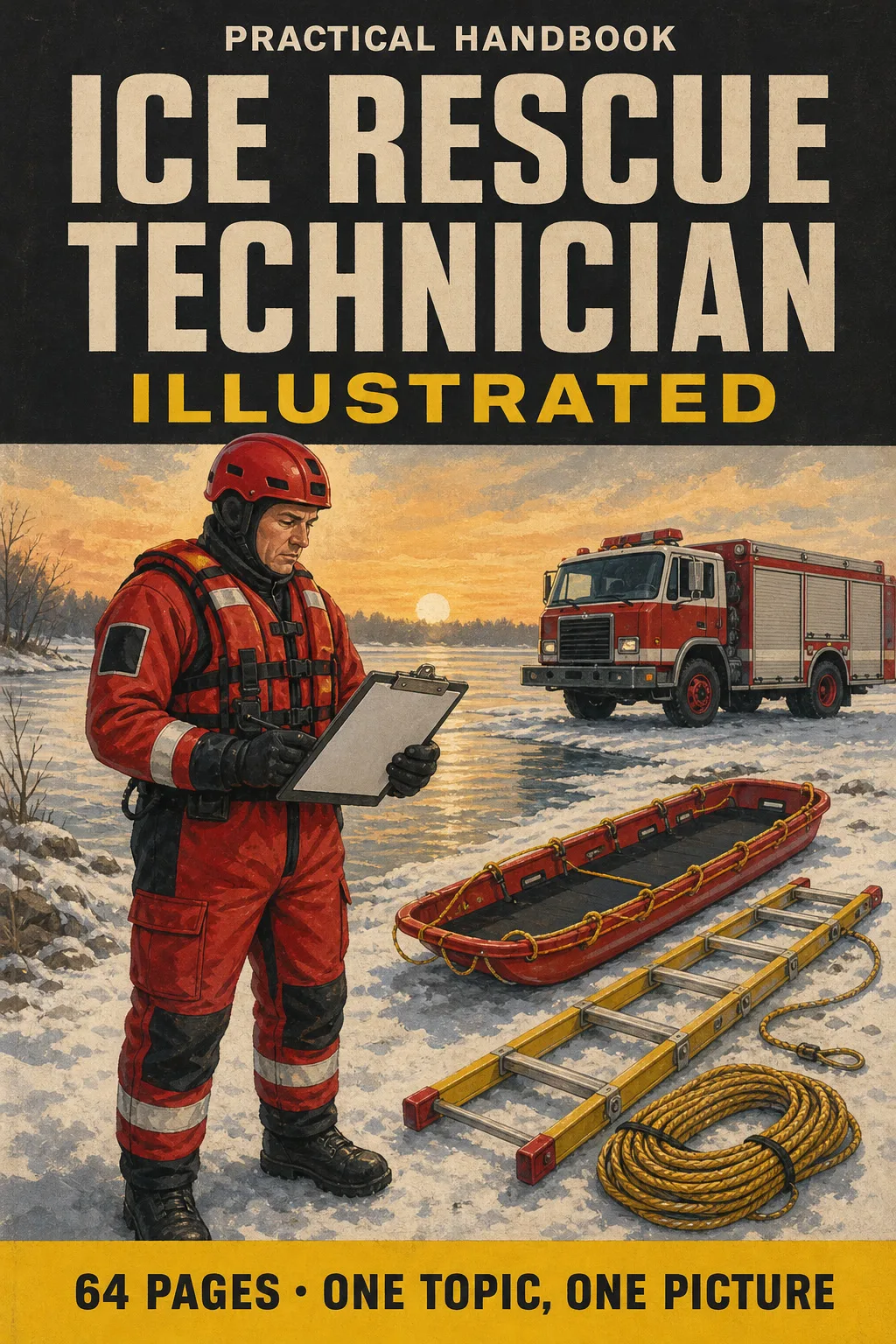
Ice Rescue Technician, Fully Illustrated: Every Skill in the Order You Run It on the Ice One Skill on Every Page

Team roles, size-up, reading ice, the ice suit, reach-throw-row-go, the tether and OATH signals, ladder and sled rescue, cold water and the handoff to EMS. Every topic has its own page: the drawing first, then what you need to remember. 64 illustrated pages.

START STUDYING THIS WAY

🔒 Secure checkout · PDF by email · 30-day guarantee

Every topic, its own pageEach skill drawn, with the explanation right next to it
64 illustrated pages8 parts, from team roles to the practical stations
Up-to-date sourcesNFPA 1006, NFPA 2500 and state DNR ice safety guidance
PDF by emailFormat

Look Inside the Book

Every page has one big drawing and a box with the numbers, steps and signals you need to know:

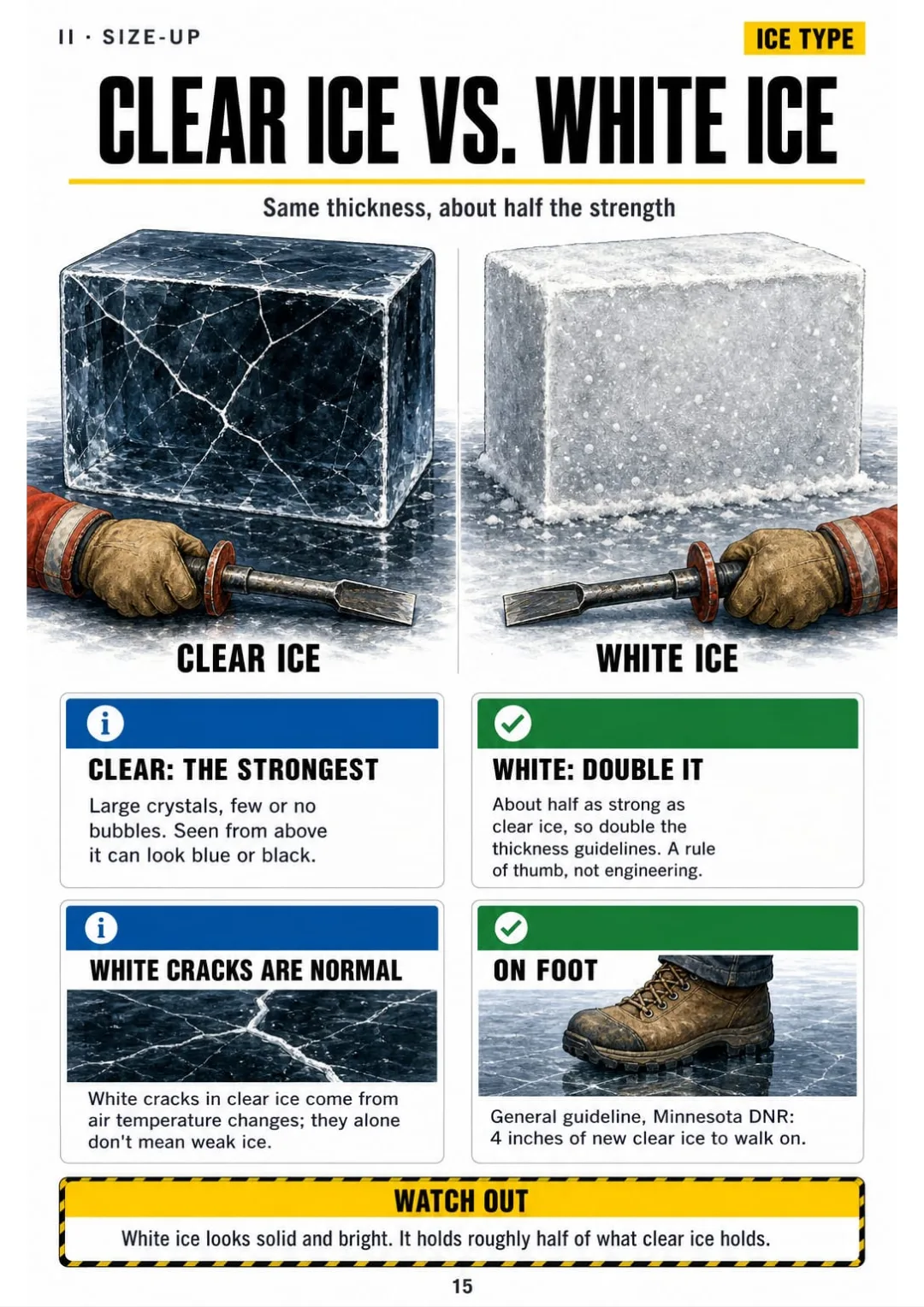
Clear ice is strongest; white ice holds about half: double the thickness.
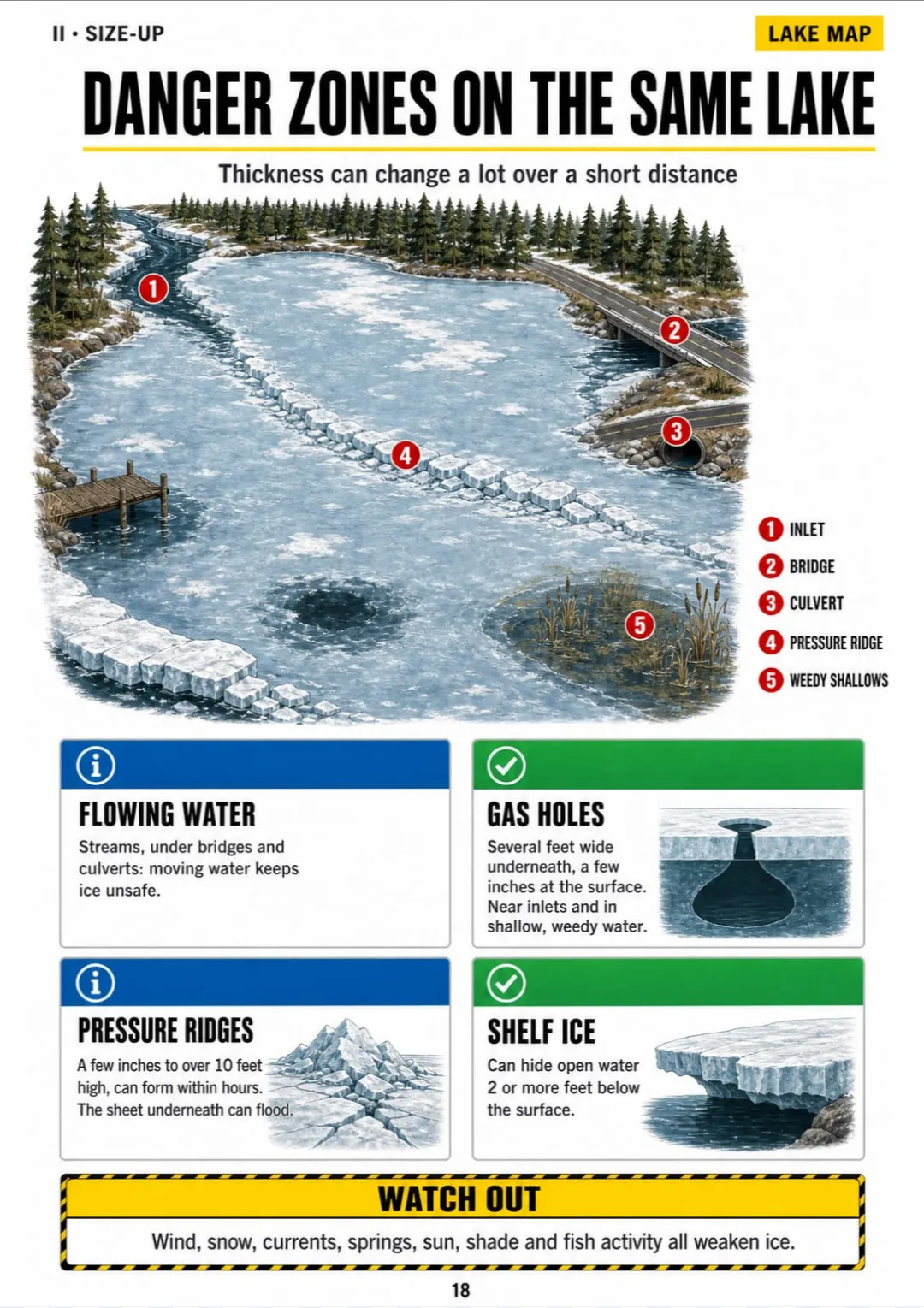
Inlets, bridges, culverts, pressure ridges and weedy shallows on one lake map.
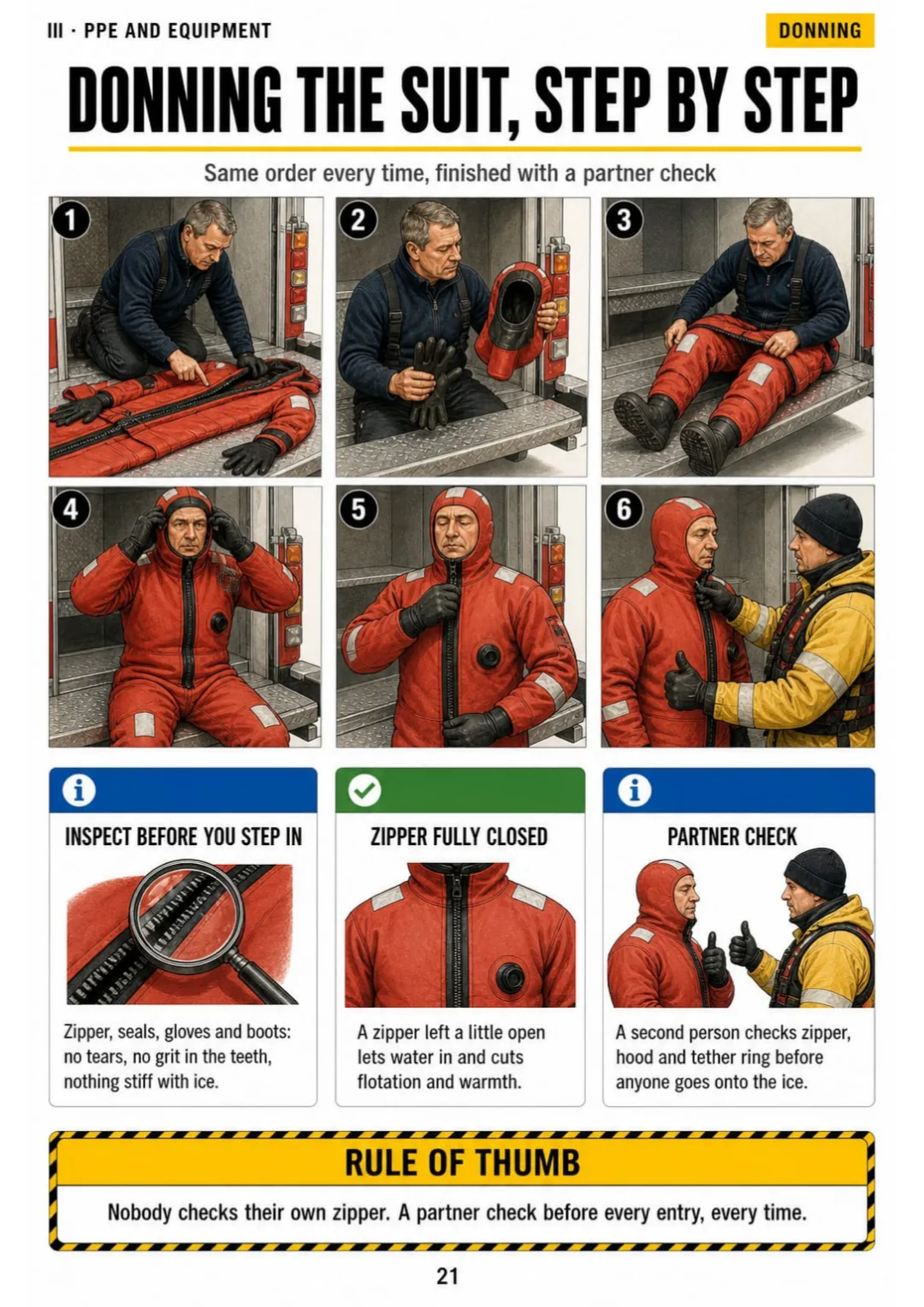
Inspect, step in, hood on, zipper closed, partner check: same order every time.
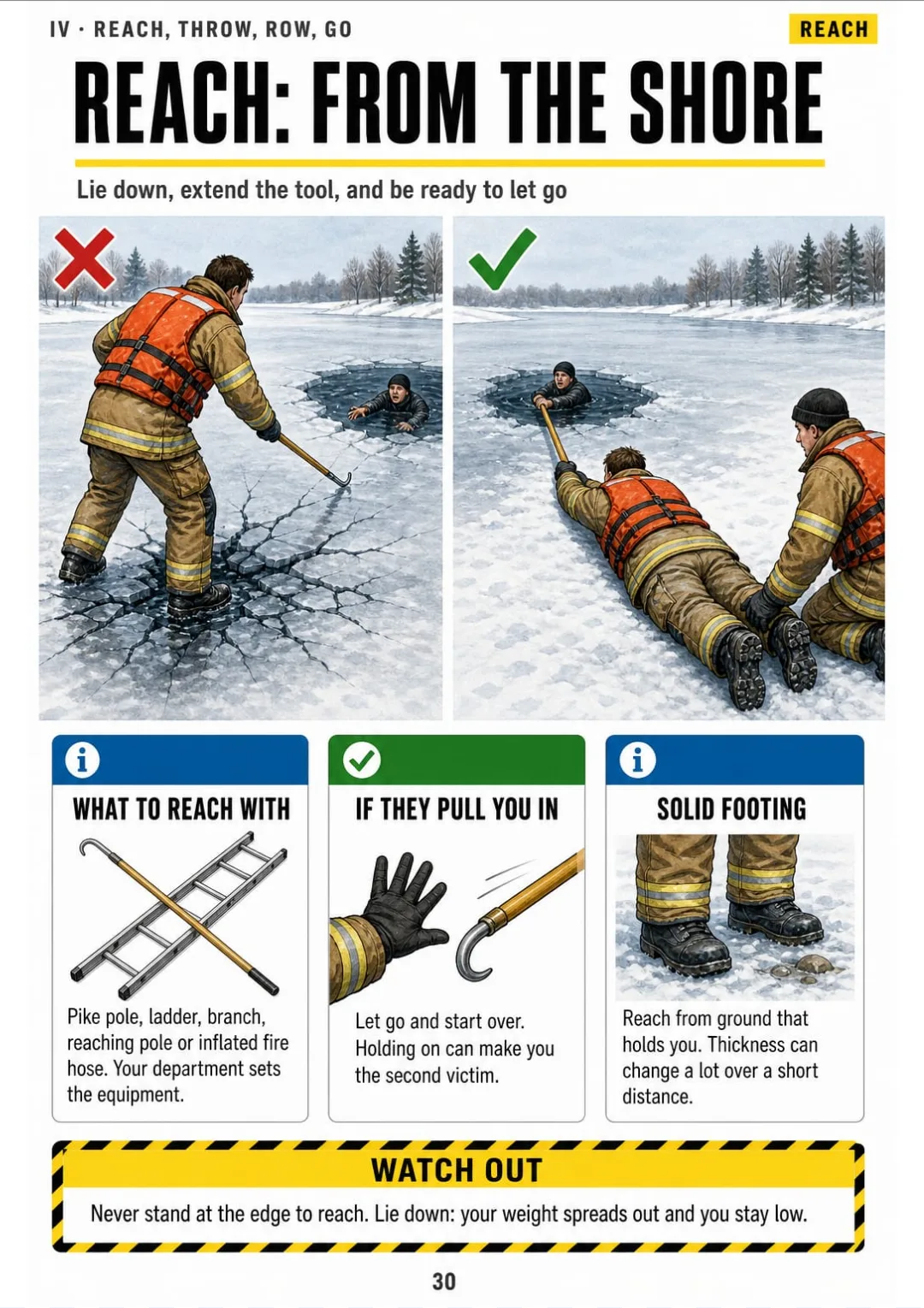
Reach from solid footing, lying down, and let go if the victim pulls you in.
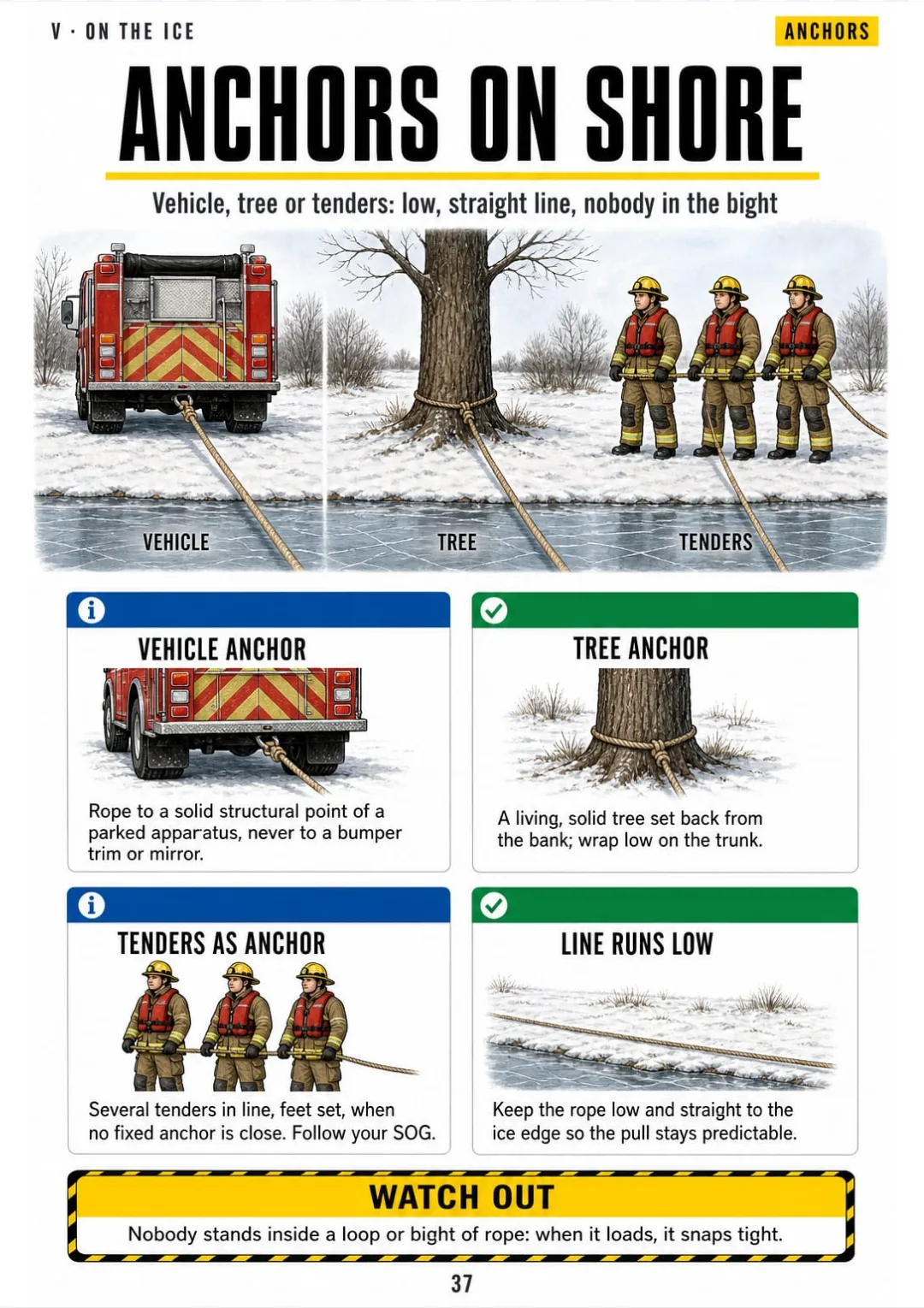
Three shore anchors: vehicle, tree or a line of tenders, with the rope kept low and straight.
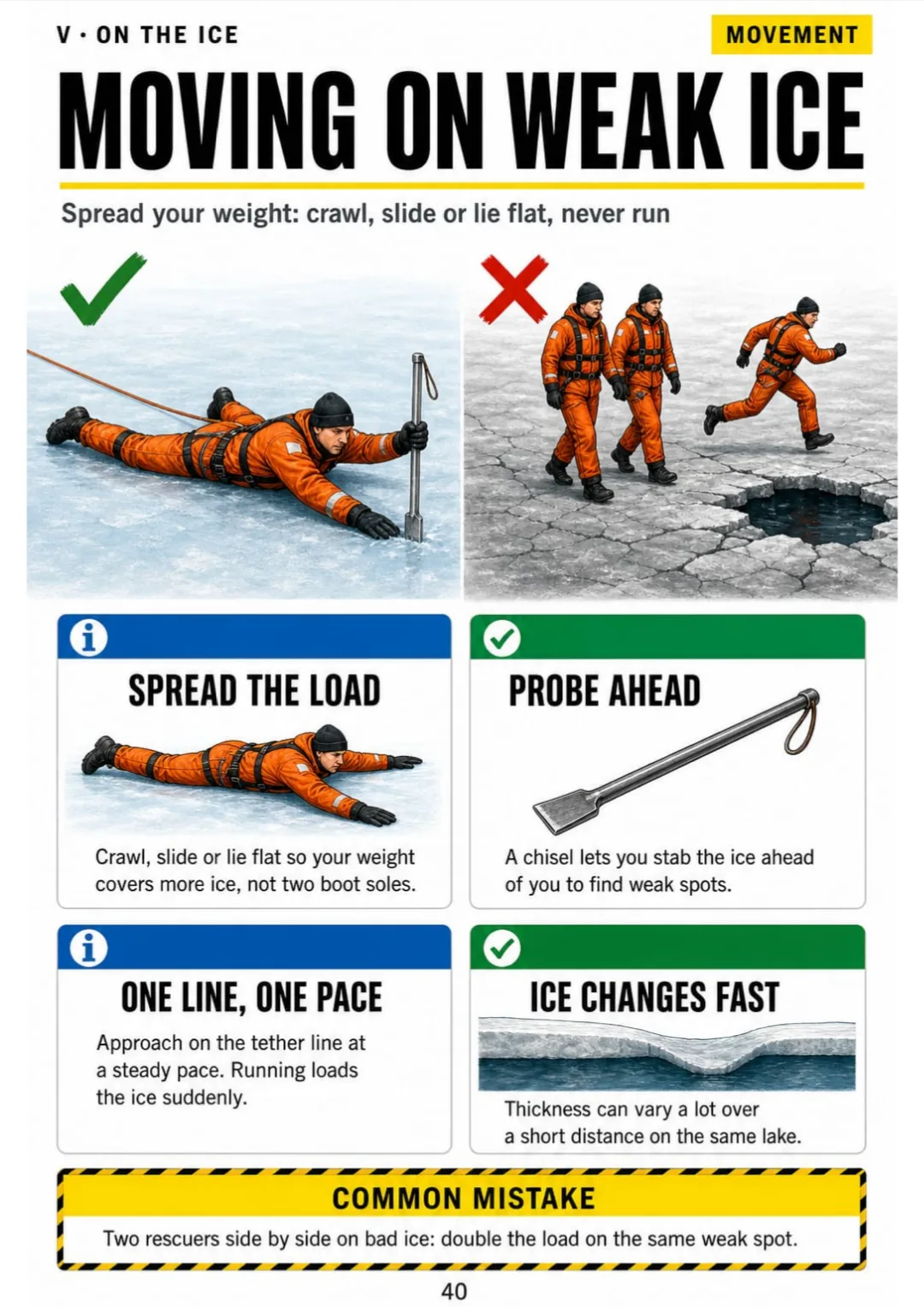
Right vs. wrong on weak ice: lie flat and probe ahead, never run or go side by side.
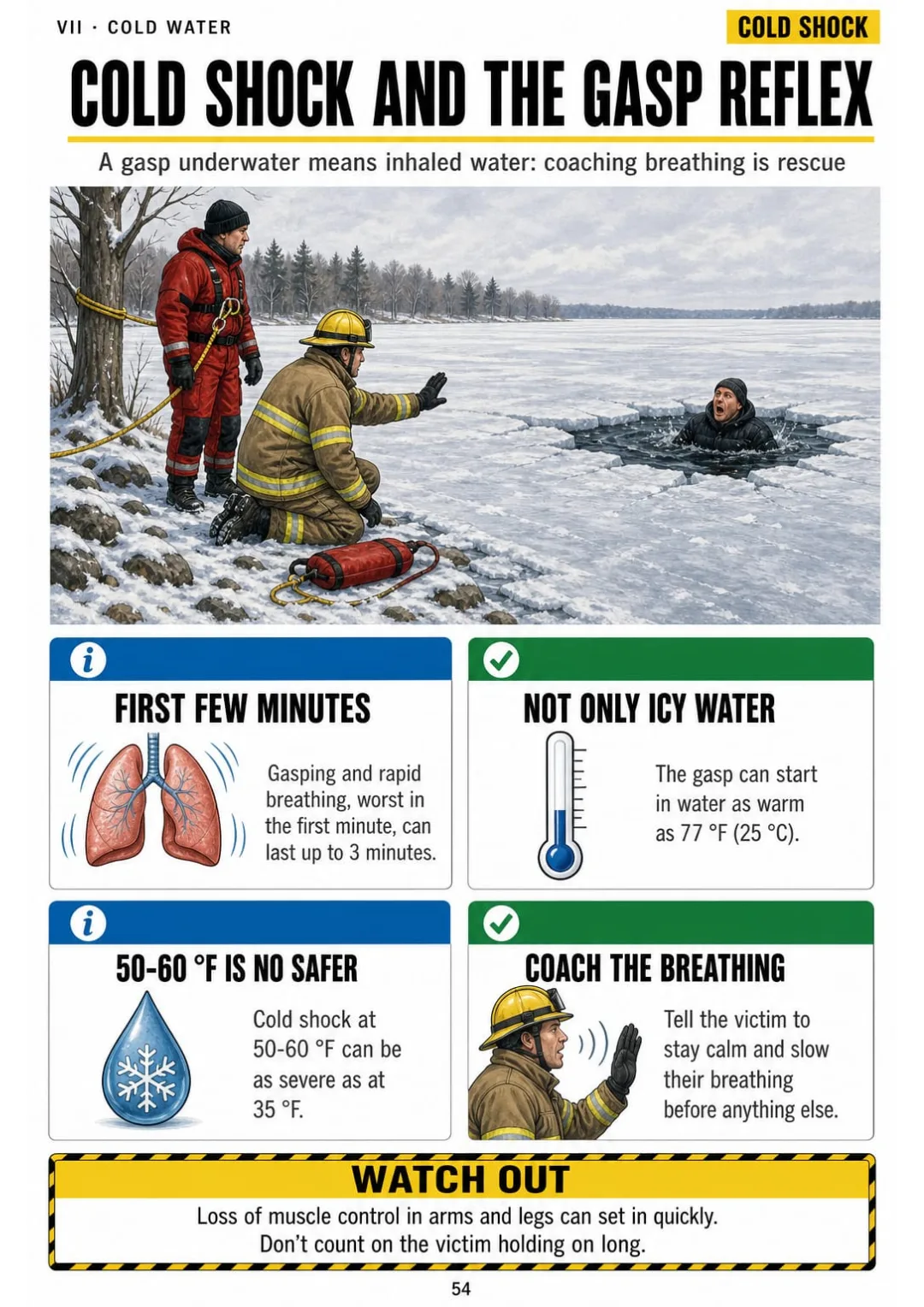
Cold shock: gasping for the first 2-3 minutes, even in 77 °F water.
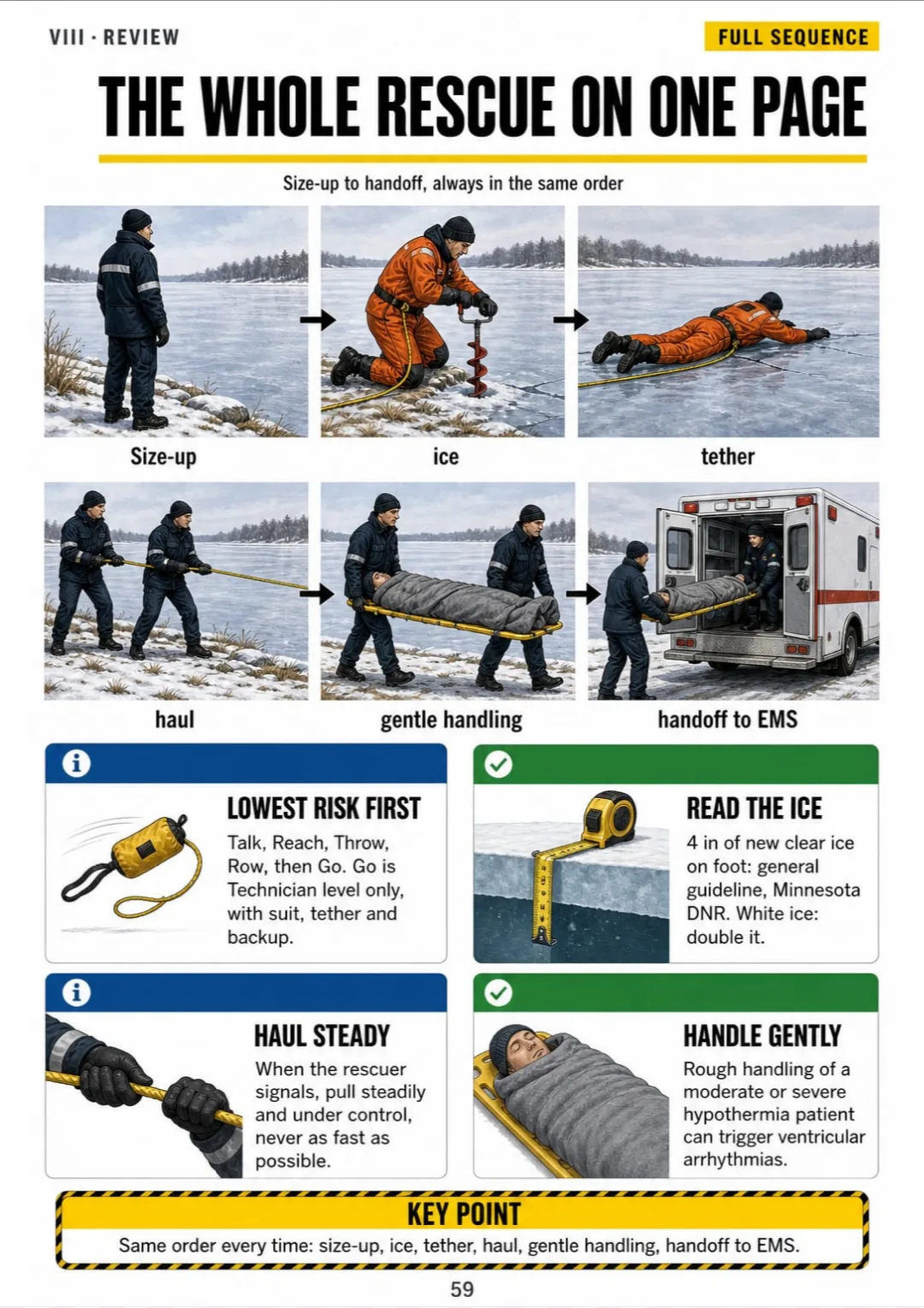
Eight steps from size-up to EMS handoff, each with its key number or rule.

Swipe to see more →

These are real pages from the book. The table of contents is the full one: 8 parts and 60 topics.

The Problem Isn't You. It's How It Was Explained to You.

You're at the skills station with the ice suit at your feet. The evaluator has a clipboard and your crew is watching. You've done this before, so why can't you remember if the hood goes on before the zipper?

In the manual, donning the suit is one paragraph. Inspection, entry, hood and closure sit in the same block as storage and maintenance. Steps written as a paragraph don't stay in order in your head.

Inspect, step in, hood on, zipper closed, partner check: same order every time.

In the book, donning the suit is one page with five drawings in a row: inspect, step in, hood on, zipper closed, partner check. Same order every time, and you see each step before you do it.

The same goes for the tether system, the OATH signals, the rescue hierarchy, the 1-10-1 rule and the sled rescue: each one has its own page.

So at the station you don't go hunting through the manual in your head. You picture the page and run the steps.

COMPARE FOR YOURSELF

The Same Topic, Two Ways to Study It

THIS
  • The manual: line after line
  • Ice hazards explained only in words
  • You get to the skills station with doubts
Ice conditions on a single body of water are rarely uniform. Moving water associated with inlets, outlets, springs and culverts inhibits ice formation and may result in significantly thinner ice in localized areas. Structures such as bridges, docks and pilings absorb and radiate heat, further weakening adjacent ice. Pressure ridges, formed by the expansion and contraction of the ice sheet, may conceal open water or fractured ice. Areas of submerged vegetation in shallow water release heat as they decompose and should therefore be regarded as potentially hazardous regardless of surface appearance.
FOR THIS
  • Every danger zone on one lake map
  • The hazards listed in a box
  • You see it and you get it
Inlets, bridges, culverts, pressure ridges and weedy shallows on one lake map.
CONTENTS

Take a Look at the 8 Parts and 60 Topics

The ice rescue team, size-up and reading the ice, PPE and equipment, reach-throw-row-go, going out on the ice, contact and extraction, cold water and patient handoff, and review for the practical stations: 64 pages, all illustrated.

IThe Ice Rescue Team · pp. 5-11
  1. Awareness, Operations, Technician: Who Does What
  2. What the Technician Level Asks of You
  3. The Rescue Sequence on One Page
  4. Team Roles Around the Hole
  5. The Tender: The Most Underrated Job
  6. The Backup Rescuer
  7. Rescue vs. Recovery
IISize-Up and Reading the Ice · pp. 12-19
  1. Size-Up in the First Minutes
  2. Witness Questions That Change the Plan
  3. How Ice Forms, in Cross-Section
  4. Clear Ice vs. White Ice
  5. Ice Thickness Guidelines in Inches
  6. Rotten and Candled Ice
  7. Danger Zones on the Same Lake
  8. Hazards Beyond the Ice
IIIPPE and Equipment · pp. 20-27
  1. The Ice Rescue Suit
  2. Donning the Suit, Step by Step
  3. PFDs on the Shore Team
  4. Ice Awls and Self-Rescue Tools
  5. Ropes for Ice: Why Floating Line
  6. Throw Bags
  7. Rescue Sleds and Inflatable Platforms
  8. Equipment Check Before Leaving Quarters
IVReach, Throw, Row, Go · pp. 28-35
  1. The Rescue Hierarchy: Lowest Risk First
  2. Talk First: Coaching the Victim
  3. Reach: From the Shore
  4. Throw: The Throw Bag
  5. When the Throw Misses
  6. Row: Boat or Craft Across the Ice
  7. Go: When a Rescuer Has to Enter
  8. Choosing the Method on Scene
VGoing Out on the Ice · pp. 36-44
  1. The Tether System
  2. Anchors on Shore
  3. Tether Line Signals: OATH
  4. Hand and Voice Signals
  5. Moving on Weak Ice
  6. The Ladder Rescue
  7. The Sled Rescue
  8. Two-Rescuer Approach
  9. When the Ice Breaks Under You
VIContact and Extraction · pp. 45-52
  1. Approaching the Victim in the Water
  2. Conscious vs. Unconscious Victim
  3. Securing the Victim: Sling or Harness
  4. Rear Approach and Body Hold
  5. Getting the Victim Onto the Ice
  6. The Haul to Shore
  7. Multiple Victims
  8. Vehicle Through the Ice
VIICold Water and Patient Handoff · pp. 53-58
  1. The 1-10-1 Rule
  2. Cold Shock and Gasp Reflex
  3. Hypothermia Stages in °F
  4. Handling a Cold Patient
  5. Out of the Wind, Into Warmth
  6. Handoff to EMS
VIIIReview and Practical Stations · pp. 59-64
  1. The Whole Rescue on One Page
  2. Practical Station Checklist
  3. Common Mistakes on the Tether
  4. Common Mistakes at Victim Contact
  5. Quick-Recall Numbers
  6. Recertifying After Quiet Winters

One Page, One Topic, All Clear

Think of it this way:

It's drill night in February at the boat launch. You're suited up and clipped in, and the tender is about to feed you line. The signals have to come without stopping to think.

The night before, you went over the OATH page: the line drawn from your chest ring to the tender's hands, 1 tug OK, 2 Advance, 3 Take up, 4 HELP. Four signals, one drawing, plus a reminder that your SOG has the final word.

Three shore anchors: vehicle, tree or a line of tenders, with the rope kept low and straight.

Same with reading the ice, donning the suit, the ladder and sled rescue, the 1-10-1 rule and the handoff to EMS: each one on its own page.

Ice Rescue Technician Illustrated is 8 parts and 60 topics, all drawn, and it ends with the whole rescue in 8 steps on one page, a practical station checklist and the quick-recall numbers.
What you see drawn, you don't have to memorize.

What's Inside Ice Rescue Technician Illustrated:

Ipp. 5-11

The Ice Rescue Team

Awareness, operations and technician levels and how they map to NFPA 1006 Level I and Level II, what the technician level asks of you, the rescue sequence, team roles around the hole, the tender, the backup rescuer, rescue vs. recovery.

IIpp. 12-19

Size-Up and Reading the Ice

Size-up in the first minutes, witness questions, how ice forms in cross-section, clear vs. white ice, thickness guidelines in inches, rotten and candled ice, danger zones, other hazards.

IIIpp. 20-27

PPE and Equipment

The ice rescue suit, donning it step by step, PFDs for the shore team, ice awls, floating line, throw bags, sleds and inflatable platforms, the equipment check before leaving quarters.

IVpp. 28-35

Reach, Throw, Row, Go

The rescue hierarchy, coaching the victim, reach from shore, the throw bag, what to do when the throw misses, row, go, and choosing the method on scene.

Vpp. 36-44

Going Out on the Ice

The tether system, shore anchors, OATH signals, hand and voice signals, moving on weak ice, ladder and sled rescue, the two-rescuer approach, when the ice breaks under you.

VIpp. 45-52

Contact and Extraction

Approaching the victim, conscious vs. unconscious, sling or harness, rear approach and body hold, getting the victim onto the ice, the haul to shore, multiple victims, a vehicle through the ice.

VIIpp. 53-58

Cold Water and Patient Handoff

The 1-10-1 rule, cold shock and the gasp reflex, hypothermia stages in °F, handling a cold patient, getting out of the wind and into warmth, the handoff to EMS.

VIIIpp. 59-64

Review and Practical Stations

The whole rescue on one page, the practical station checklist, common mistakes on the tether and at victim contact, quick-recall numbers, recertifying after quiet winters.

At the end of the book: The whole rescue in 8 steps on one page, a practical station checklist and the quick-recall numbers.
Plus: 2 Free Books

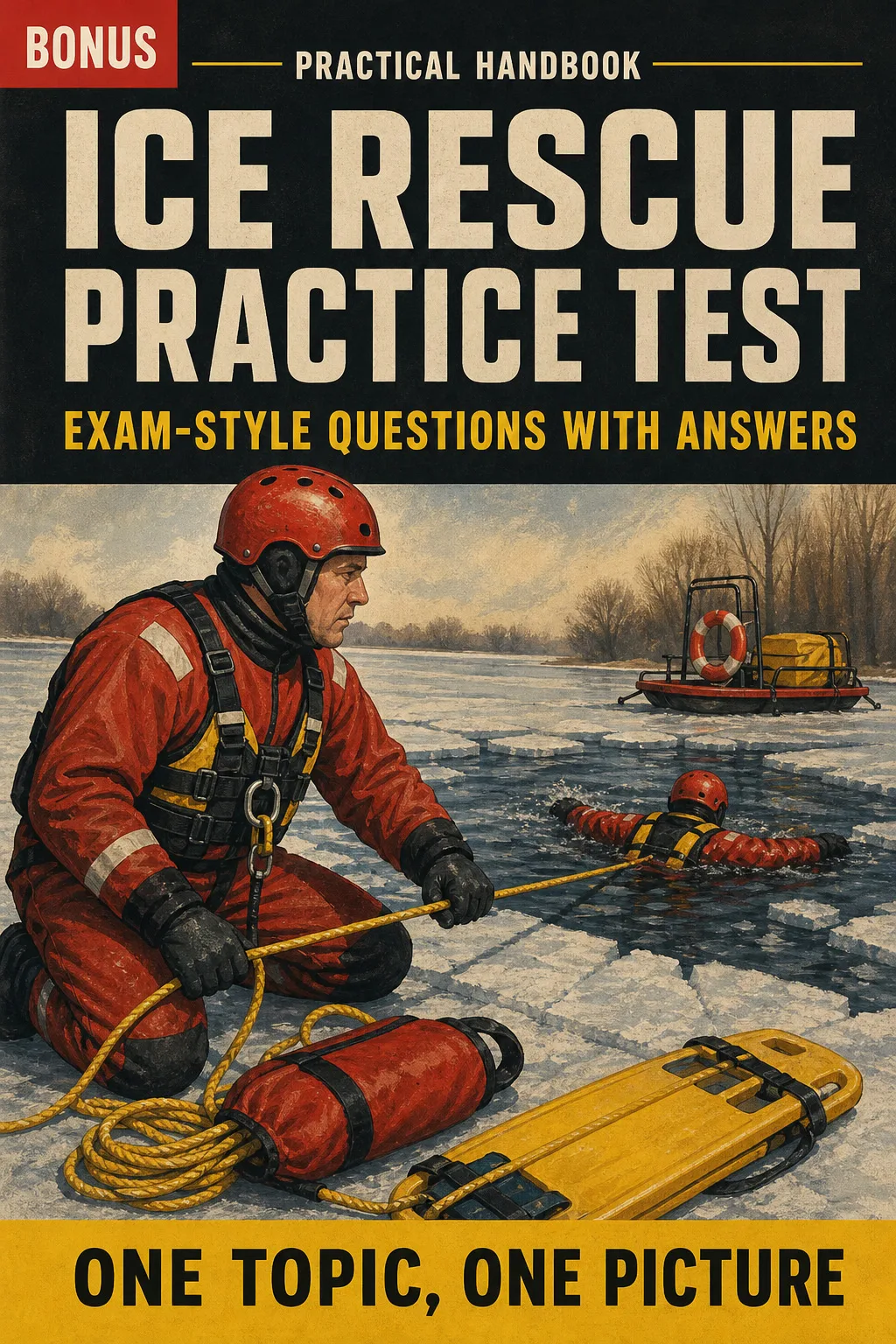
Ice Rescue Practice Test: Exam-Style Questions with Answers

BONUS 1: «Ice Rescue Practice Test: Exam-Style Questions with Answers»

Value on its own: US$ 17.90

Check what you know before the written test, with every answer explained and tied to the page where it's drawn.

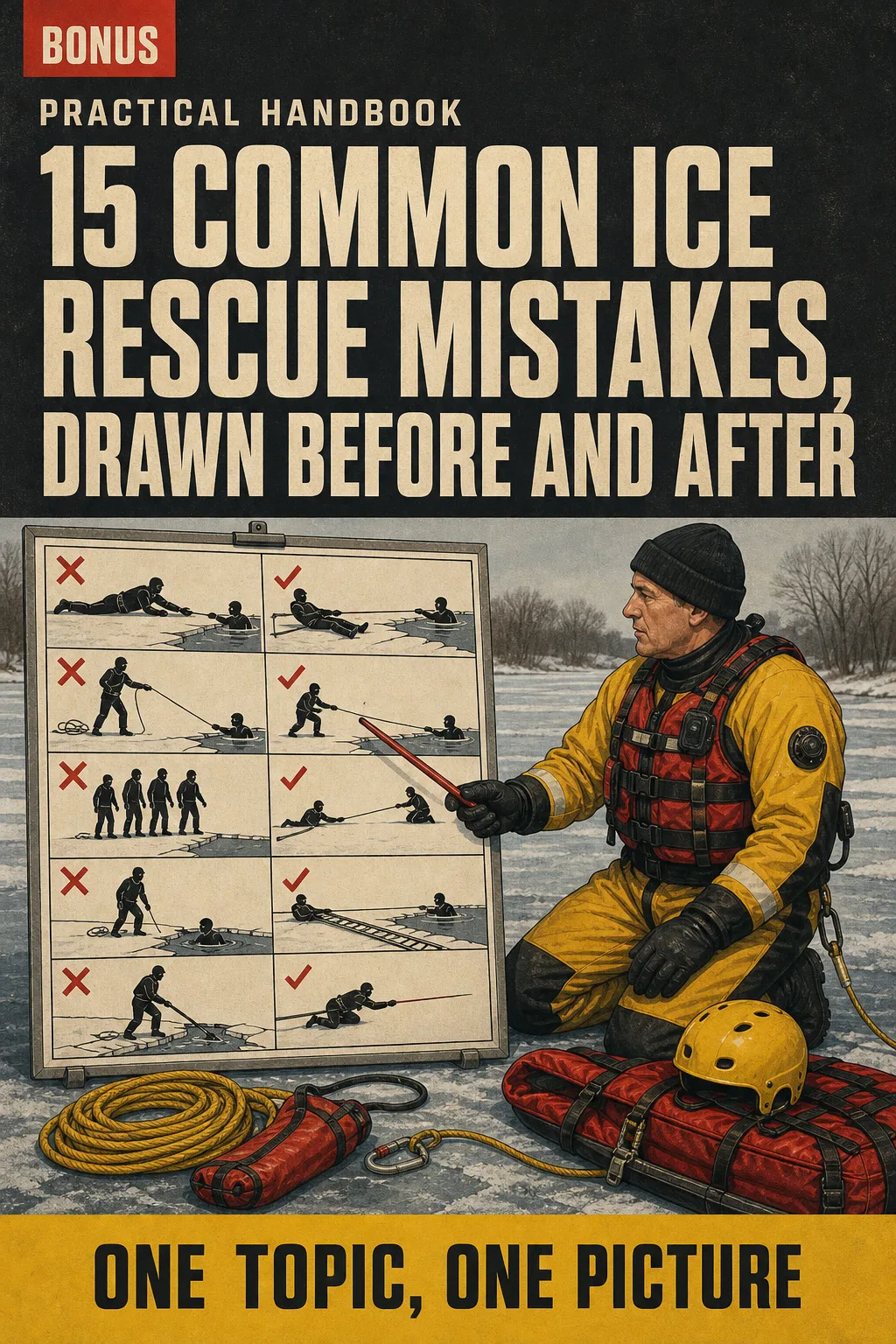
15 Common Ice Rescue Mistakes, Drawn Before and After

BONUS 2: «15 Common Ice Rescue Mistakes, Drawn Before and After»

Value on its own: US$ 14.90

Spot the mistakes people make most often on the ice, from tether setup to patient contact, and see the right way next to each one.

Ice Rescue Technician Illustrated with 2 Free Books

  • Ice Rescue Technician Illustrated: 64 illustrated pagesUS$ 63
  • BONUS 1: Ice Rescue Practice Test: Exam-Style Questions with AnswersUS$ 17.90
  • BONUS 2: 15 Common Ice Rescue Mistakes, Drawn Before and AfterUS$ 14.90
  • High-resolution PDF to printIncluded
Total value US$ 95.80
YOUR PRICE:
US$ 27
You save US$ 68.80
YES, I WANT ICE RESCUE TECHNICIAN ILLUSTRATED FOR US$ 27

📄 This is a digital PDF book sent to your email: nothing is printed or shipped.

Secure purchaseEncrypted payment30-day guarantee

PDF by email: We email you Ice Rescue Technician Illustrated as a PDF, together with the two free books. It's a single payment: no installments, no extra charges.

Who This Book Is For

You're taking the Ice Rescue Technician course

You're taking the Ice Rescue Technician course

Every topic from the course has a drawn page, in the same order you'll run the rescue. You review after a shift without going back through the slides.

Your skills stations and written test are coming up

Your skills stations and written test are coming up

The practical station checklist, the quick-recall numbers and the practice test, so you walk in knowing the order of every step.

You're already on the ice team

You're already on the ice team

A printable refresher for the start of every winter: the tether, the signals and the suit on one page each, ready to put in front of the crew.

Everything You Get Today

US$ 95.80US$ 27
YES, I WANT ICE RESCUE TECHNICIAN ILLUSTRATED FOR US$ 27

📄 This is a digital PDF book sent to your email: nothing is printed or shipped.

30DAYS
GUARANTEE

30-Day Guarantee

Try Ice Rescue Technician Illustrated for 30 days, bonus books included.

We refund everything if the file won't open, if the book isn't what you see here, if you were charged twice or if the email doesn't arrive. Just email us.

You pay once. No subscriptions.

Frequently Asked Questions

Is it for me if I've been on the job for years and I'm recertifying?

Yes. It isn't a beginner's book: it puts the whole technician-level ice rescue in one order, one topic per page, so you can review fast and catch what's gone fuzzy after quiet winters.

Will it work for my state's certification?

It follows the ice rescue job performance requirements of NFPA 1006 (now also part of NFPA 2500), cross-checked with state ice safety guidance. Pro Board and IFSAC certifications are built on those requirements, so the skills and their order will look familiar. Each state and department writes its own skill sheets: check yours, and where they differ, they rule.

Is it official, and does it give me a certificate?

No to both. It's independent study material, not affiliated with or endorsed by NFPA, Pro Board, IFSAC or any state certification board. It doesn't give you a certificate or training hours: your certification comes from your course, your skills stations and your state's written test.

Does it replace the course or hands-on ice training?

No. It's a study and review book. It doesn't replace your certification course, hands-on training on the ice, your department's SOGs, local medical protocols or your medical director.

Are the practice questions the ones on the exam?

No. They're written for this book to help you check what you know. They aren't official questions from any exam.

When and how do I get it?

The book and the 2 bonus books come as PDFs by email, sent to the address you enter at checkout.

Do I have to pay every month?

No. It's a one-time payment.

Can I have it on paper?

Yes. The PDF is printable: print it at home or at a print shop and keep it at the station.

How does the refund work?

You have 30 days. We refund everything if the file won't open, if the book isn't what you see on this page, if you were charged twice or if the email doesn't arrive: just email us.

Before You Close This Page

No more rereading without anything sticking.

The tether, the signals and the suit: you see them drawn, and that's it.

You walk into the skills station knowing where everything is.

Drawings make studying faster.

The book is right below.

One-time payment: US$ 27 · Guarantee: 30 days · PDF by email

YES, I WANT ICE RESCUE TECHNICIAN ILLUSTRATED FOR US$ 27

📄 This is a digital PDF book sent to your email: nothing is printed or shipped.